

A plain-English primer
Understanding mineral rights and royalties.
Start here
Understanding
mineral rights.
When most people think of mineral ownership, they picture a monthly royalty check. While royalty income is an important benefit, it is only one part of the story. Mineral ownership includes several types of interests, each with its own characteristics, ownership structure, and income profile.
Understanding the differences matters because each type of interest is acquired differently, valued differently, and offers its own opportunities. This guide explains the most common ownership types in plain English so you can better understand what you own or what you're considering purchasing.
The three asset classes
Three types of
ownership.
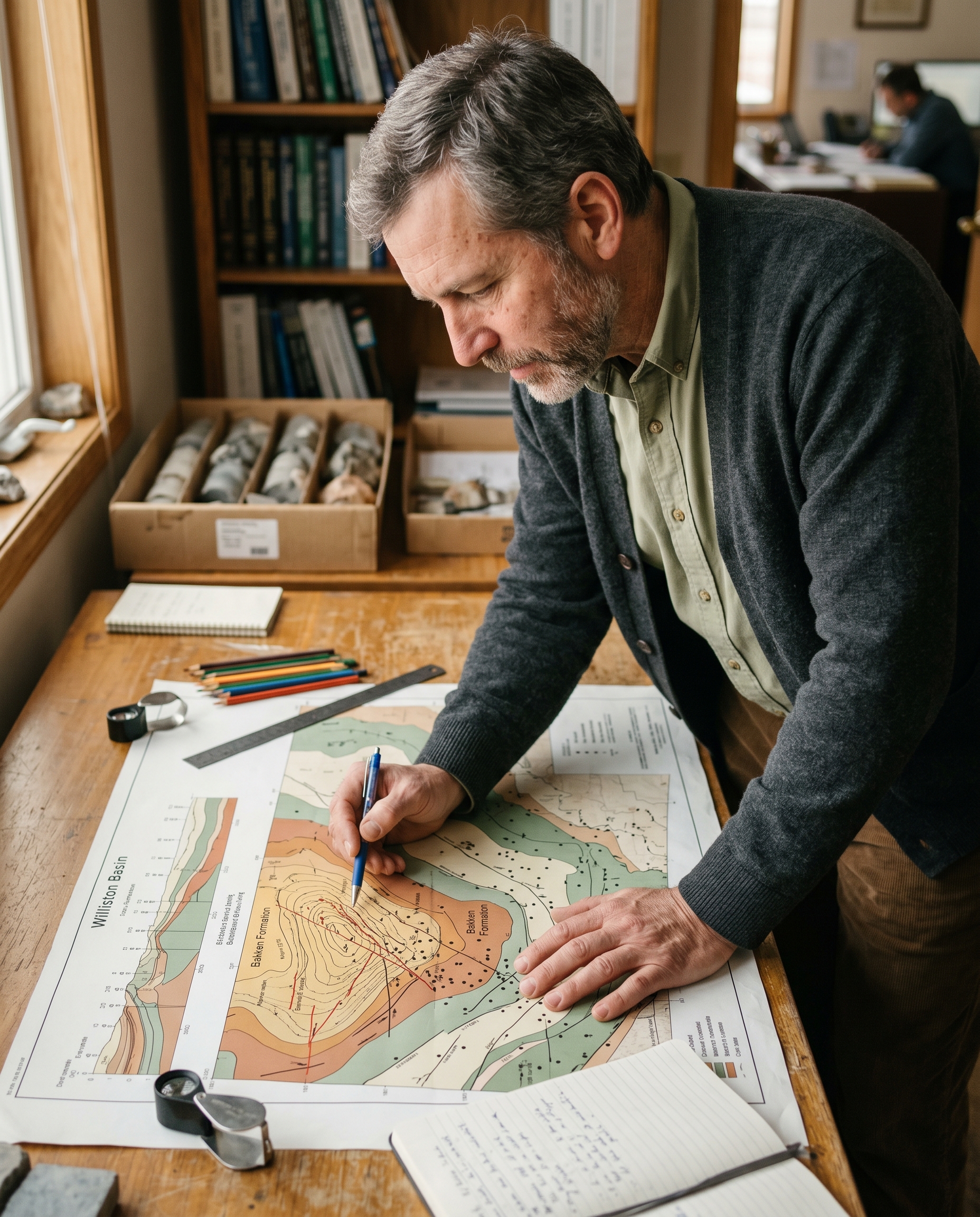
Mineral ownership generally falls into three categories, each offering a different combination of current income, long term appreciation, and development potential.
Mineral rights - non-producing
Ownership of the oil and natural gas beneath a tract of land before production begins. Because these interests are typically acquired at a lower cost, they can offer significant long term appreciation if the property is successfully leased and developed.
Mineral rights - producing
Ownership of producing mineral interests that generate monthly royalty income while still benefiting from future development, such as new wells, recompletions, or expanded drilling.
Overriding royalty interest (ORRI) - producing
A royalty interest created from a working interest rather than the mineral owner's interest. ORRIs generate royalty income without drilling or operating costs but remain in effect only for the life of the underlying lease.
How it works
From ownership to
income.
Mineral ownership can generate income at different stages of development. Depending on where a property is in its lifecycle, owners may receive one or more of the following.
On signing
Lease bonus
When an oil and gas lease is signed, you are paid an up-front bonus per acre. It is yours to keep even if no well is completed.
While held
Future opportunity
While a property is being evaluated or developed, its value may increase through leasing activity, permitting, planned drilling and surrounding activity. Depending on the terms of the lease, some owners may also receive delay rental payments while waiting for development.
In production
Monthly royalty income
Once oil and natural gas are produced and sold, the operator pays the mineral owner their share of the revenue. Mineral owners do not pay drilling, operating, or maintenance costs.
Over the life
Continued development
Many properties see additional value over time as new wells are drilled, existing wells are recompleted, or new formations are developed. While production from individual wells naturally declines, future development can create additional income opportunities.
Reference
The mineral & royalty
glossary.
Our glossary explains the terms you'll encounter when owning, buying, or selling mineral and royalty interests. From division orders and leases to royalty statements and title documents, each definition is written in plain English to help you better understand your ownership.
- Royalty Interest
- The right to receive a share of the revenue from oil and natural gas produced from a property without paying the costs of drilling or operating the wells.
- Decimal Interest (DOI)
- Your decimal interest represents your ownership share in a well or unit and is used to calculate your share of production revenue. It appears on your division order and revenue statements and determines the amount of royalty income you receive.
- Held By Production (HBP)
- A lease that remains in effect because oil or natural gas is being produced in paying quantities.
- Overriding Royalty Interest (ORRI)
- A royalty interest created from a working interest that entitles the owner to a share of production revenue without paying drilling or operating costs. An ORRI does not affect the mineral owner's ownership interest.
Why owners hold them
What makes mineral
ownership valuable.
Monthly royalty income
As oil and natural gas are produced and sold, mineral owners receive royalty income paid directly by the operator. Income varies with production and commodity prices and can continue for many years.
Why investors own mineral rightsTax advantages
Mineral and royalty ownership may provide certain tax advantages, including percentage depletion deductions. Because every situation is different, we recommend consulting your tax advisor regarding your specific circumstances.
Like-kind 1031 eligibility
Qualifying mineral and royalty interests may be eligible as like kind replacement property in a Section 1031 exchange, allowing owners to defer capital gains taxes when exchanging qualifying investment property.
How a 1031 exchange worksDevelopment upside
As operators drill additional wells or develop new formations, mineral interests may increase in value without additional capital investment by the mineral owner. Future development is never guaranteed and depends on operator activity and market conditions.
Investor voices
What investor partners say.
“I've worked with Don and his team at Heritage Land & Minerals on over five mineral properties. I've continued investing with them and have enjoyed how easy and straightforward they have made the process.”
Names abbreviated at investor request. Past performance is not indicative of future results.
Confidential Prospectus
Heritage Land & Minerals
Prospectus
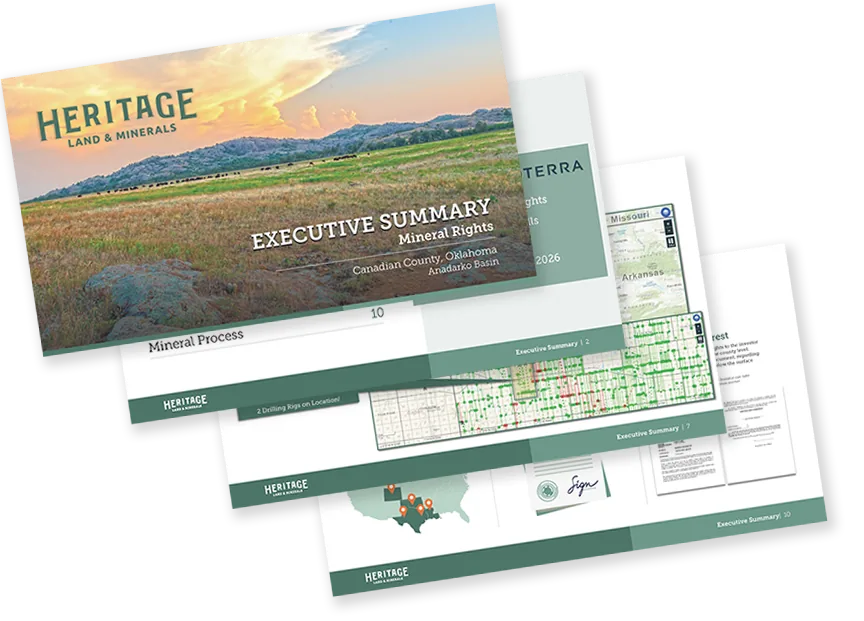
Current offerings, tax considerations, and a mineral acquisition overview.
- Current mineral and royalty offering details
- Why buy mineral rights, including tax benefits
- Location, well mapping, and surrounding production
- How purchasing works, step by step
 Request access below
Request access to current offerings
If you're an accredited investor exploring oil and gas investments, we're ready to discuss fit and share our current prospect details.
Risk disclosure
Mineral and royalty investments involve substantial risk, including the loss of principal. Distributions depend on production volumes, commodity prices, operator performance, and other factors outside Heritage's control, and are not guaranteed. Mineral and royalty interests are illiquid; there is no public market for them, and resale, including its price and timing, is not guaranteed. Heritage Land & Minerals offerings are available only to accredited investors and only by means of a confidential prospectus that contains the complete risk disclosure. This website is not an offer to sell or a solicitation of an offer to buy any security.